

Friend of Democracy,
There are two parties in Berlin that, during the campaign for the weekend’s House of Representatives election (Abgeordnetenhauswahl), consciously opted against populism—focusing instead on calm, deliberation, positive messages, debate, and a matter-of-fact approach:
- Alliance 90/The Greens Berlin, with lead candidates Werner Graf and Bettina Jarasch, and
- Volt Berlin, with Anna Auerbach and Paul Loeper.
The results are sobering.
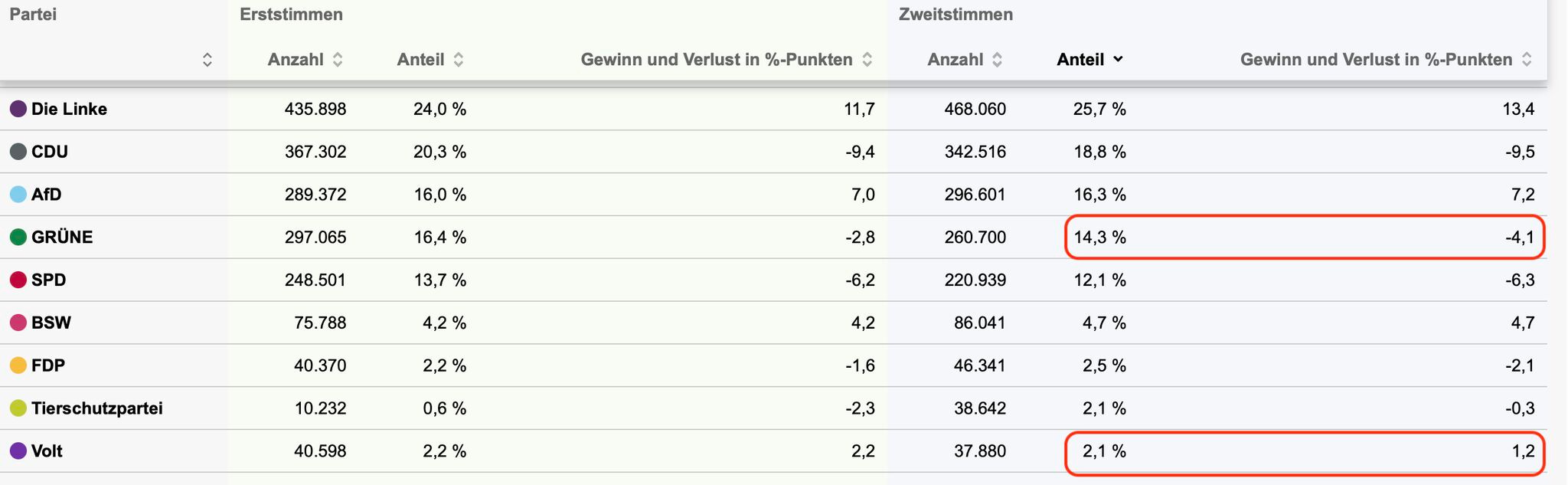
The Greens dropped 4.1 percentage points, finishing with just 14.3 per cent. The young party Volt managed a meagre 2.1 per cent.
The winners were, above all, the loud voices, the polarisers, the doom-mongers, and the truth-benders.
This is the defining characteristic of our time: digitalisation has not only created space for parties and movements aiming to capture the votes of those disengaged from politics; it has also made it easy for these political players, because social media algorithms amplify their specific style of communication.
The result: populist and extremist platforms are gaining enough support to command majorities in parliaments, while well-reasoned, sensible policy proposals are relegated to the fringes. Voters are opting for the sensational.
Can democracy withstand this? It would not be the first time that democracy met its end through democratic means. Yet, it would also not be the first time that people voted populists and extremists out of office.
How the tide turns depends, in large part, on those working to ensure that a majority of the public becomes resilient to the allure of simple answers. The Greens and Volt are doing a great deal in this regard. But it is not enough. The parties cannot do it alone; it requires all of civil society. The weekend’s election is proof of this.
See you in Democracy,
Johannes Eber