

Friend of Democracy,
Across Germany, the current refrain is this: The Federal Chancellor Friedrich Merz isn’t up to the job. The loudest voices are coming from the conservative camp—not least from within his own centre-right party, the CDU itself. We supported Merz; we gave him at least a fair chance, these critics argue. But now, they say, it has become clear that Merz is no reformer. Sure, the blame lies primarily with the coalition partner—the Social Democrats (SPD)—whose political vision renders them incapable of pulling the country out of the mire, they say, yet it also lies with Friedrich Merz, who is failing to keep the SPD in check.
This is the story being told by the conservative side: The “cart of Germany” is stuck in the mud, and Merz is not the right man to pull it out.
Some on the right side of the political spectrum may have only recently embraced this notion. Others, however, have been cultivating this narrative since the government’s inception. It is a narrative with a distant and clear objective: to pave the way for a right-wing conservative majority government. A very right-wing conservative government. Those within the CDU who pursue this goal do not say so openly—not yet, at least. For now, it remains a political taboo. Consequently, they are working to engineer a political climate in which such a constellation becomes the only viable path to power for the Union.
It appears that these people are well on their way to success. The governing CDU is currently doing a lot (through disputes with the coalition partner) to ensure the failure of the existing coalition, or, at the very least, to make a renewed coalition with the Social Democrats impossible following the next federal election. But with whom, then, could the CDU form a coalition? With the Greens? With the Left Party? With the Liberals (FDP), which is currently sinking into political irrelevance?
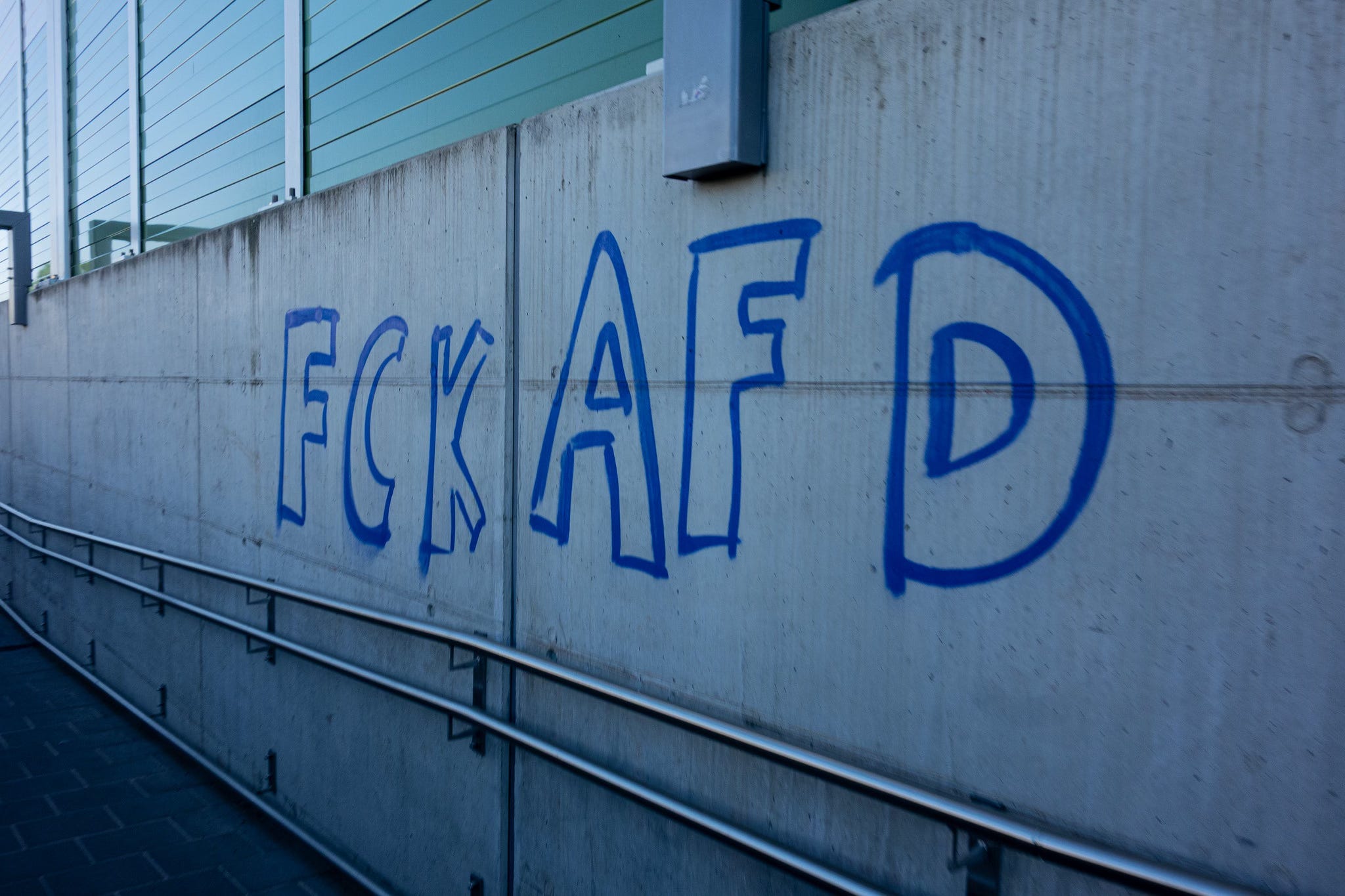
If the CDU continues on this path, only one potential coalition partner will remain: the Alternative for Germany (AfD)—a party that is, in part, openly right-wing extremist. That is the goal of some—and, I fear, of quite a few—within and around the Merz party. Then the argument will be that power cannot be left in the hands of the cranks to the left of centre; that, for the sake of the country’s future, one must bite the bullet and agree to cooperate with the AfD.
Friedrich Merz will, in all likelihood, not lead such a coalition as Federal Chancellor. He has decency. I just heard on the news that the AfD’s poll numbers in Saxony-Anhalt have risen once again. It is possible that the Union will no longer have to concern itself with the question of who, from within its own ranks, is to succeed Friedrich Merz as German Federal Chancellor.
See you in Democracy,
Johannes Eber
That analysis ist correct.
Yet I would like to add another dimension:
Since absolute majorities are rare in our democracy our political System has rested predominantly on coalitions. Building a coalition used to mean cooperating and jointly shouldering resonsibility for our society.
This understanding of the meaning of coalition has gotten lost. Coalition parties stopped cooperating. They accuse the partner of blocking progress, they invest heavily in sharpening their Profile, they play exclusively to their own base etc.,all that at the expense of getting things done.
They do not cooperate. Thus they blatantly violate the voter's will.
That became obvious under our last red-Green-yellow Government and it certainly is the case with the current black-red (non-)coalition.
I am mad too!
Yet turning to the AfD, a certified right-wing party with fascist tendencies and no politically viable program is no option.
Why is it that anybody can expect to be better off with that party in power. I don't get it!
We better forcefully push our Black Red Green parties to cooperate, to reach compromises, to make progress instead of standing still.
People are starting to believe false prophets in Blue.