Friend of Democracy,
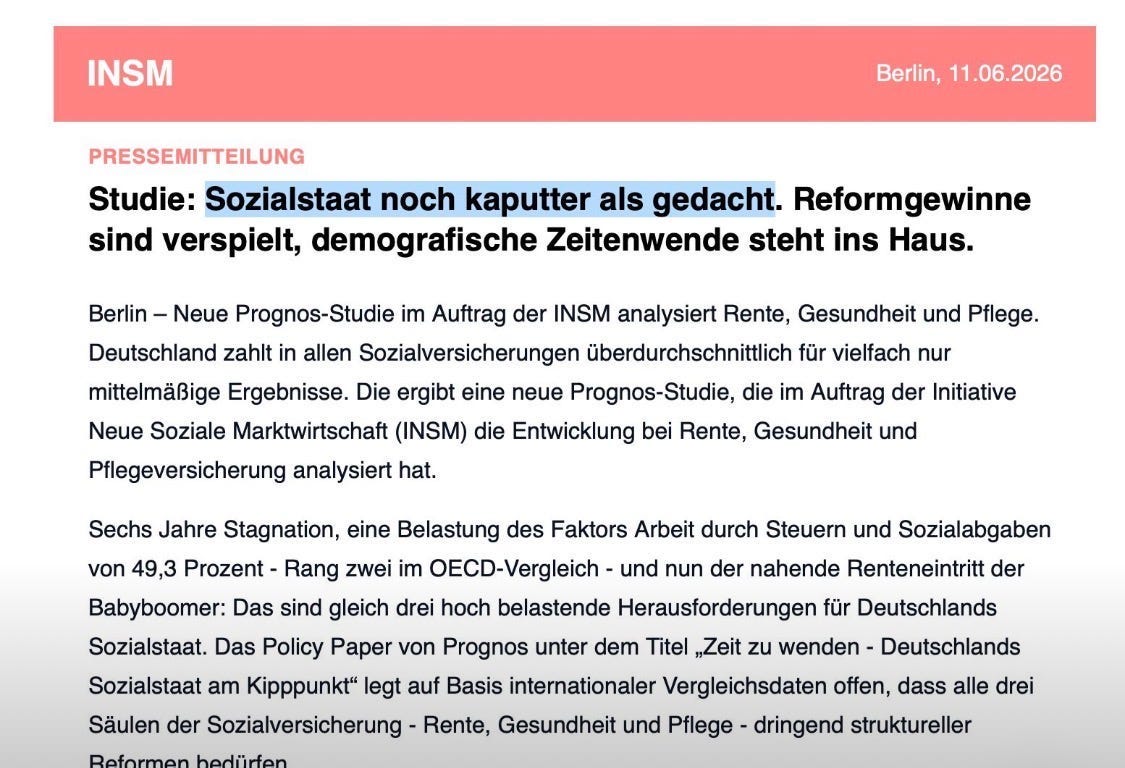
For far too long, the communication strategy of numerous German lobbyists consisted of talking everything down. Trade unions railed against painful yet necessary reforms; the employers’ lobby predicted the ruin of the German economy, the welfare state, and the government itself (as shown in the image above: “Welfare state even more broken than thought”). The prevailing mantra from many people and organisations was that everything was going down the drain. Eventually, most Germans came to believe it—that everything was indeed going to ruin. And journalists, at times, played along, too—because the more dramatic the story, the more clicks it generated.
Extremists and populists absorbed this narrative and turned it into votes.
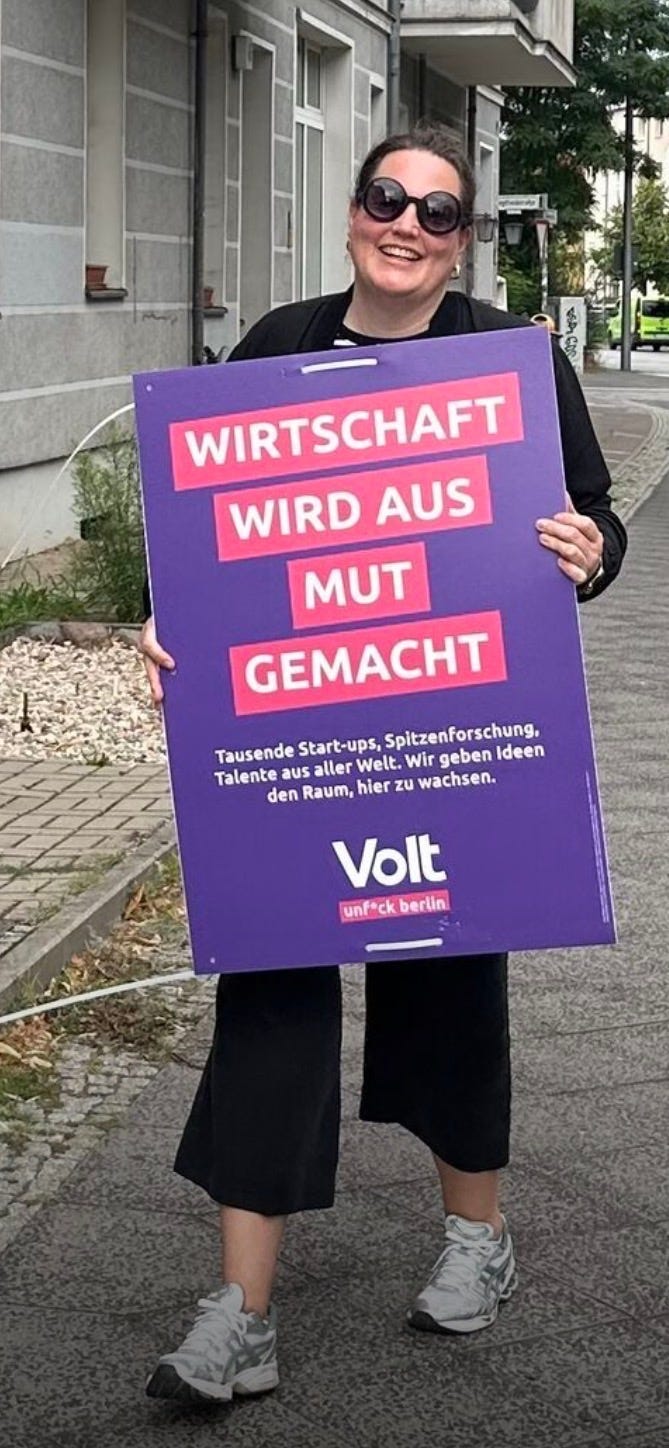
Now, after the election in the German state of Saxony-Anhalt and the far-right Alternative for Germany (AfD )’s success there, no one wants to take responsibility. Everyone is calling for consequences, insisting that things cannot go on like this. Yet, everyone could have started with themselves—and still can. By refraining from disparaging rhetoric. By banishing the populist narrative of Germany’s decline to the “toxic waste” bin of lobbyist communications. By avoiding sweeping generalisations and defamatory language. By showing respect despite differences in substance and conflicting interests. By shifting the narrative from “Everything will get much worse unless...” to “Everything will get better if...” Perhaps it is not yet too late for such a narrative—like the one found on a recent campaign poster from the party Volt for the upcoming Berlin state election on September 20 (spotted, for instance, by Viktoria Schütz; see photo below): that the economy is built on courage.
See you in Democracy,
Johannes